
See Unsee summary
Australia has selected the Mongolian-language documentary The Wolves Always Come at Night as its official Oscar entry for Best International Feature Film at the 2026 Academy Awards. Directed by Gabrielle Brady, the film also qualifies for Best Documentary Feature. A bold, hybrid work, it’s already done a strong festival tour and made headlines—tragically—for reasons beyond cinema.
A powerful story on human resilience and climate chaos
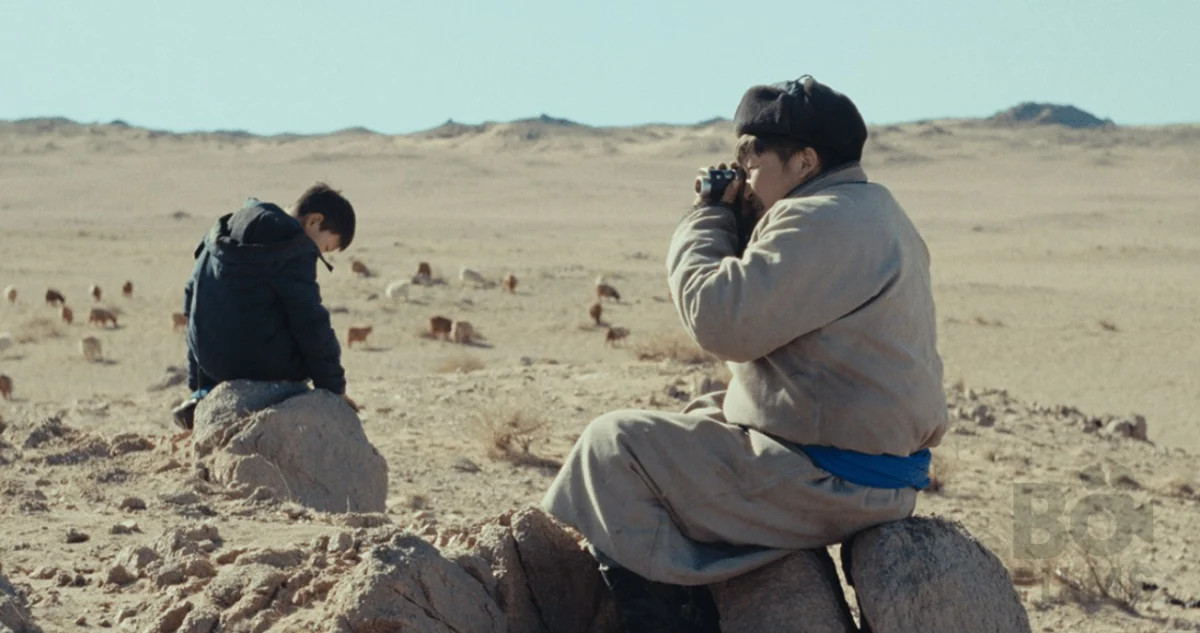
The Wolves Always Come at Night blends documentary and fiction in a way that feels intimate, poetic, and brutally real. At the heart of the film are two Mongolian herders, Davaasuren Dagvasuren and Otgonzaya Dashzeveg, who decide to leave their homeland after a catastrophic sandstorm ravages their community. The storm isn’t just a natural disaster. It’s a consequence of something much bigger—climate change—and Gabrielle Brady never lets us forget that.
Watching the film, I kept thinking of the emotional weight carried by silence: the open steppes, heavy skies, and the quiet reckoning of lives disrupted by forces beyond control. It’s not a loud film. It’s not trying to shout. It just shows, with grace and urgency.
From TIFF to controversy: a bittersweet premiere
The world premiere took place at the 2024 Toronto International Film Festival as part of the Platform Prize program—a section that often highlights bold, emerging voices in world cinema. But the screening was overshadowed by controversy: Canadian authorities denied visas to the film’s two main subjects. The very people whose lives shaped the film couldn’t be there to witness it. To read Gwen Stefani headlines magical 2025 Disney Christmas Parade
That absence stayed with me. It reminded me that even in cinema, where stories are honored and protagonists celebrated, power structures still have the last word. It’s rare to see such a disconnect between the storytelling and the lived experience behind it.
The impact of the film didn’t stop there, though. It quickly moved through the global festival circuit:
- London Film Festival (2024)
- Zurich Film Festival
- IDFA (International Documentary Film Festival Amsterdam)
- San Francisco International Film Festival
- True/False Film Festival
- Sydney Film Festival
Each screening added to its growing reputation as a quiet but unshakable force.
A cinematic bridge: Germany, Australia, Mongolia
What truly sets The Wolves Always Come at Night apart is its origin. This is the world’s first co-production between Germany, Australia, and Mongolia. That, in itself, is a powerful gesture—three very different cinematic cultures working together on a story rooted deep in the Mongolian landscape.
Behind the scenes, the team is impressive: executive producers include Oscar winner Dan Cogan, Deanne Weir, Stefanie Plattner, Alexander Wadouh, and Emma Hindley. The film received support from Screen Australia, Weir Anderson Films, and Germany’s Storming Donkey Productions. BBC Storyville and SWR Arte also stepped in for financing, with Madman Films managing the Australian release. Worldwide sales are in the hands of Cinephil, a company known for handling strong international documentaries. To read Toho expands into Europe with bold anime distribution moves
From a production standpoint, it’s a small masterpiece of collaboration.
Australia and the international Oscar category: a quiet tradition
Though English is Australia’s dominant language, the country has a quiet tradition of submitting non-English films to the Best International Feature category. Since 1996, there’s been a steady line of submissions that reflect a willingness to support diverse voices and Indigenous stories.
Some notable past entries include:
- Ten Canoes (2006)
- Samson and Delilah (2009)
- The Rocket (2013)
- Tanna (2016), which earned an official Oscar nomination
The Wolves Always Come at Night fits into that lineage of films that speak several languages—visually, culturally, politically—even when they don’t use many words. Its selection came from a committee of film industry professionals chosen by Screen Australia.
To me, this isn’t just a film. It’s a quiet call, echoing across desolate lands, reminding us that stories can cross borders even when people can’t. And that cinema, when handled with care, empathy, and vision, can turn climate tragedy into a deeply human act of remembrance.
