
See Unsee summary
Madrid has quickly become a magnet for both international and domestic film productions, steadily transforming into one of Europe’s most dynamic audiovisual hubs. With cutting-edge infrastructure, generous public support, and growing partnerships with global studios and platforms, the Spanish capital continues to attract a remarkable mix of high-profile shoots from around the world.
A favored backdrop for global productions
In recent years, Madrid has welcomed major international titles, cementing its reputation beyond national borders. AMC’s The Walking Dead: Daryl Dixon, which premiered in Madrid, famously repurposed corners of the city into eerie, post-apocalyptic landscapes. Seeing familiar streets turned ghostly and battered, knowing they’re just a subway ride away, creates a strange yet fascinating sensation.
Other productions with international buzz include Day Drinker, a film by Marc Webb starring Johnny Depp and Penélope Cruz, and The Beast featuring Samuel L. Jackson. Actor and director Diego Luna also chose Madrid to film Ceniza en la boca. These names aren’t here by coincidence; they’re drawn by what Madrid now has to offer: flexibility, technical know-how, and a deep creative pool.
A thriving national scene
If foreign studios are looking to Madrid, local talent isn’t staying behind. Some of Spain’s most compelling new stories are rooted right in the city. Pedro Almodóvar, never far from his Madrilenian roots, filmed Amarga Navidad here. Movistar Plus+ invested in Anatomía de un instante, a political drama that takes us back to a key moment in Spanish history. And Los Javis, who’ve redefined Spanish series with Paquita Salas and Veneno, shot La bola negra in the capital. To read Gwen Stefani headlines magical 2025 Disney Christmas Parade
What’s striking is how Madrid manages to shape-shift depending on the story. From palace intrigue to urban grit, the city is an actor in itself, offering style and mood without ever overpowering the narrative.
Streaming giants settle in
Madrid isn’t just a passing trend on the streaming landscape. It’s a strategy. Netflix films Berlin in the city, spinning off from La Casa de Papel’s success. Prime Video adapts Reina Roja, bringing Juan Gómez-Jurado’s dark thrillers to life. International collaborations, like El Inmortal or the Spanish–Japanese The Head, show that Madrid isn’t looking inward — it’s building bridges across continents.
Other examples include:
- La increíble historia de Julia Pastrana (Disney+)
- Isla Brava (Vix)
- Productions from Dopamine and Focus Studios
- High-end series with Latin American partnerships
It’s clear: platforms don’t just pass through Madrid. They’re moving in.
Infrastructure on the rise
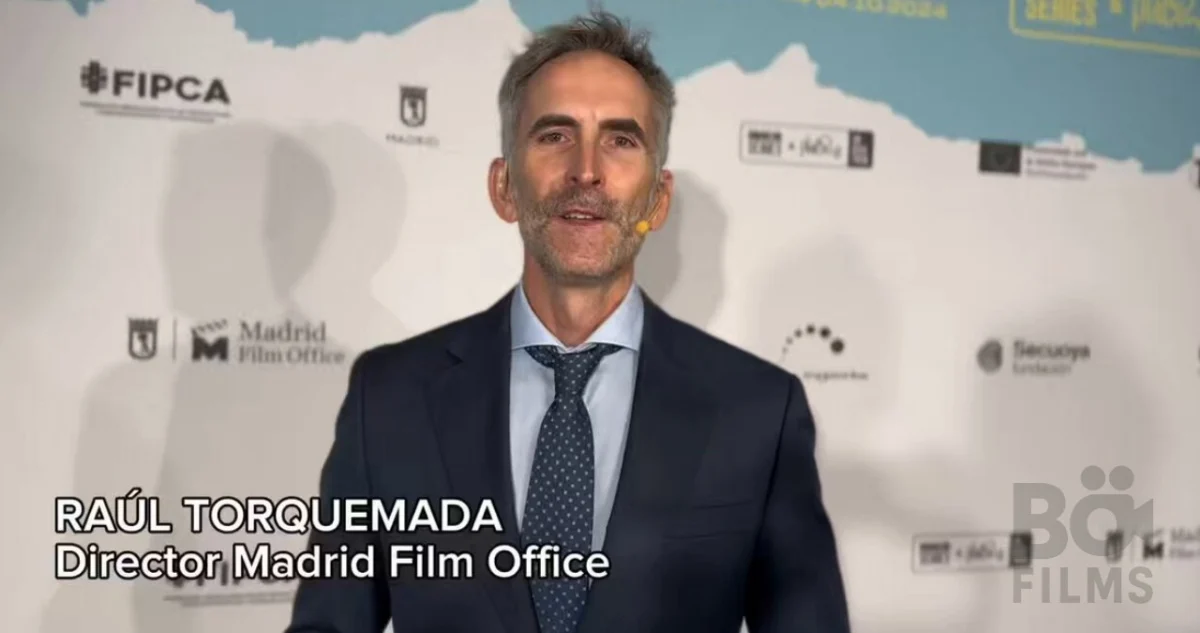
To support this audiovisual explosion, Madrid is rapidly scaling up. Raúl Torquemada, director of the Madrid Film Office, shared that the city’s audiovisual budget increased by 18% in 2024. That’s not just numbers. The city is pouring up to €4 million into productions, including international co-productions. Madrid Audiovisual Cluster was also launched, enhancing coordination between public and private players. To read Toho expands into Europe with bold anime distribution moves
Technically, the city is stepping up. Madrid Content City is entering its fourth phase and aiming for completion in 2026. Toboggan Group is working on a brand-new hub in Villaverde. Among the most innovative updates are:
- Virtual production studios from EFD Studios (2,000 m²)
- Nonstop studio developments (1,000 m²)
- Infinia’s upgraded tech capabilities
- Innovative real-time and 3D labs by Orca Studios and Mr Factory
As someone passionate about visual storytelling, these developments give me hope — not every city is investing this heavily in future-proof cinematic tools.
Volume speaks for itself
Madrid isn’t just preparing. It’s already delivering. In 2024, the city hosted:
- 41 feature films
- 53 series
- Over 430 commercials
And 2025 is off to an even stronger start: by July alone, more than 636 productions had taken place, including 46 fiction films and 33 series. These aren’t just statistics, they’re a pulse. It shows that people want to tell stories here, and others want to listen.
A gateway between continents
Beyond numbers and sets, Madrid is emerging as a cultural connector. With 16 co-produced feature films and 10 ambitious series made in partnership with Latin American players since 2023, the city is repositioning itself as a vital meeting point between Europe and Latin America.
Events like the ECAM Forum, the Platino Awards, and the Iberseries & Platino Industria all feed into one idea: Madrid isn’t just filming. It’s fostering dialogue, developing talent, and exporting vision.
And at the heart of it all: people
Torquemada often insists that audiovisual growth can’t happen without training and creative support. It’s refreshing to hear that among all the logistics and platforms, attention is still paid to storytellers. Programs like the Film Academy Residencies, TorinoFilmLab, and the European Writers Club place development at the center.
There’s also a poetic ambition behind all this: using screen stories to connect viewers to the city’s cultural memory. That’s something no soundstage can replace. And as someone who’s walked through Lavapiés one day and seen it turned into a film set the next, I know exactly what he means.
