
See Unsee summary
The Things You Kill, a haunting family drama steeped in grief and obsession, has been chosen as Canada’s official submission for Best International Feature Film at the 98th Academy Awards. Directed by Alireza Khatami, this atmospheric co-production unfolds in Turkish and Farsi, and lands in select U.S. theaters on November 14.
A story where revenge blurs with reality
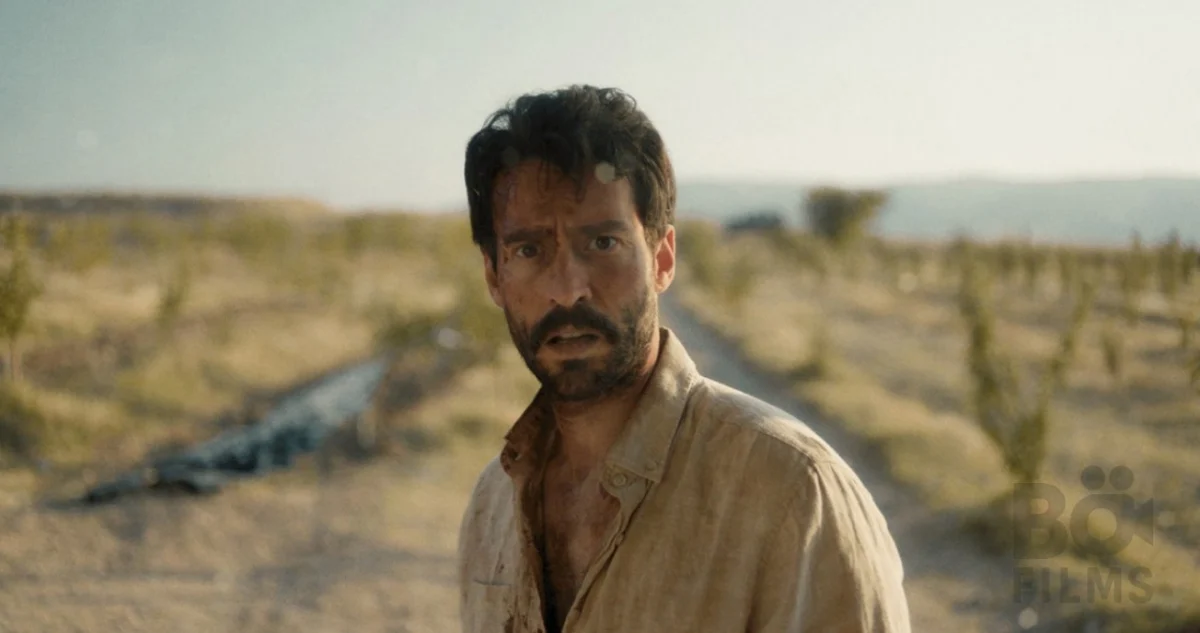
At the heart of the film is Ali, a university professor portrayed with quiet intensity by Ekin Koç. After the suspicious death of his chronically ill mother, Ali becomes obsessed with the idea that his abusive father (Ercan Kesal) is to blame. His descent into obsession leads him into the orbit of a mysterious gardener, a character who isn’t just a partner in revenge but seems to echo Ali’s own spiraling mental state.
The premise might feel familiar—a man seeking justice against a violent past—but what makes the film stand out is the way it refuses to settle into a straightforward revenge arc. The storytelling fragments, sometimes bewildering, often intimate. As a viewer, I found myself pulled between sympathy for Ali and discomfort at his unraveling gaze on reality.
Performances that carry emotional weight
Ekin Koç carries much of the film’s emotional core. His performance is restrained but loaded with tension. Every glance, every pause carries the shadow of unresolved trauma. Facing him, Ercan Kesal gives the father a cold, almost spectral presence that lingers long after his scenes end. To read Charlize Theron and Taron Egerton face off in 2026’s Apex trailer
Supporting performances by Erkan Kolçak Köstendil and Hazar Ergüçlü add subtle layers to the film’s shifting psychological landscape. These aren’t just secondary characters—they function like emotional mirrors to Ali’s fractured sense of self. There’s a sense that no one here is truly grounded.
This is the kind of ensemble that isn’t flashy but catches you off guard. It’s the moments between words that stay with you—the silences, the hesitations, the sudden outbursts.
A surreal journey between naturalism and chaos
The Things You Kill opens in a world we recognize—quiet streets, tight family spaces, late-night phone calls. But slowly, reality begins to slip. The tone shifts in waves, moving from realist to outright surreal. At times, the film feels like it’s channeling Buñuel’s quiet absurdities or De Palma’s stylized paranoia.
Critic Jordan Mintzer was right to highlight the film’s tonal transformation. What begins as a psychological investigation turns chaotic, dreamlike, even nightmarish. For me, one sequence stood out—a dimly lit dinner scene where time seems to fold in on itself. Nothing overtly supernatural happens, yet the air is thick with dread, disconnected from logic. It reminded me of that feeling after a bad dream, where objects are familiar but everything feels off.
Writing and production with international sensibilities
Alireza Khatami doesn’t simply direct; he writes and produces. His touch is evident throughout, from the elliptical dialogue to the intentional disorientation in some scenes. The screenplay avoids neat resolutions, preferring to leave the audience with questions rather than clarity. To read Ranking Shyamalan’s Hits: Which Film Defines His Legacy?
Key production facts:
- Writer-director: Alireza Khatami
- Co-producers: Elisa Sepulveda-Ruddoff, Cyriac Auriol, Mariusz Włodarski, Michael Solomon
- Co-production countries: Canada, France, Poland, Turkey
- Language: Turkish and Farsi
The international mix behind the scenes brings its own flavor. The film never feels fully grounded in one culture or one place. It moves across emotional and political borders, just as Ali’s mind loses its own boundaries. That restlessness is part of the film’s soul—and part of its challenge.
Recognition and upcoming release
Premiering at Sundance, The Things You Kill earned Alireza Khatami the Directing Award in the World Cinema Dramatic Competition. That recognition feels deserved. Whether you embrace the film’s disjointed narrative or find it too elusive, the control Khatami has over image, mood, and pacing is unmistakable.
The film’s release in the U.S. will be handled by Cineverse starting November 14. For those looking for something that doesn’t offer easy answers but lingers uncomfortably in the mind, I’d suggest making the effort to see it in theaters. It’s not a film you watch for plot—it’s one that pulls you inside its emotional logic and doesn’t quite let go.
Personally, I left the screening unsettled—but in a way I value. The Things You Kill reminds us that stories of grief and revenge rarely follow a clean path. Sometimes they disorient, sometimes they disarm. But when they find the right form, they can move something deep inside us.
