
See Unsee summary
In 1985, a single encounter at Sundance changed the course of film history. Euzhan Palcy, then a young filmmaker from Martinique, saw her life transformed by a piece of advice from Robert Redford: “Trust yourself.” That encouragement led her to become the first Black woman to direct a major Hollywood studio film.
A door opens in Park City
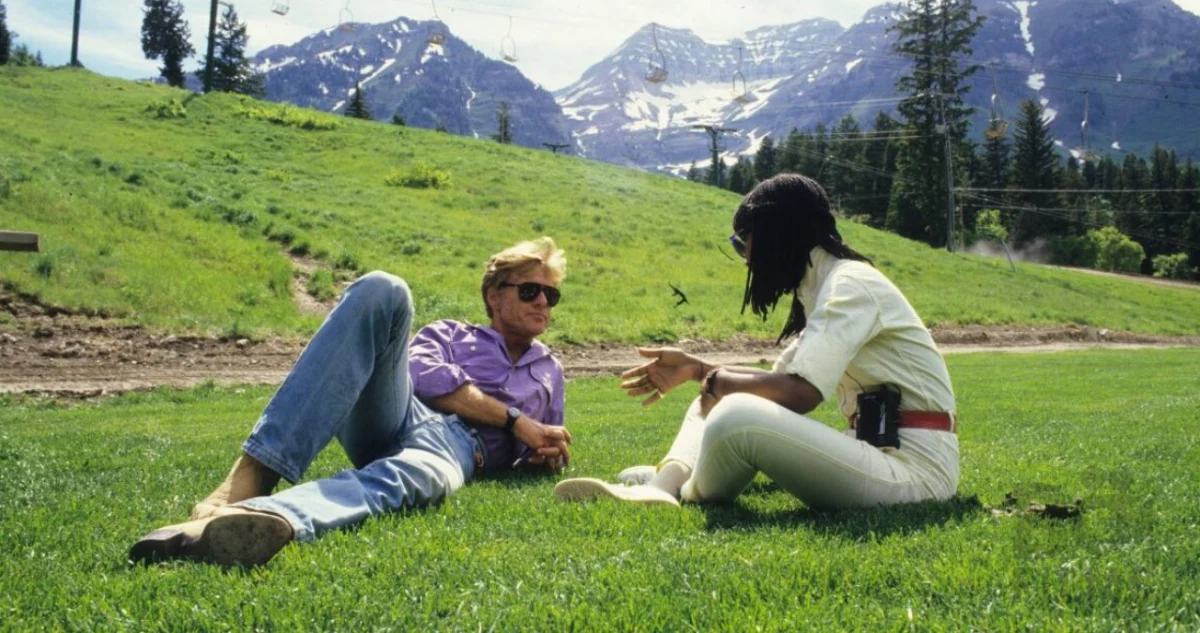
When Euzhan Palcy arrived at the Sundance Directors Lab in Park City, Utah, she was one of just ten young French directors selected by Robert Redford himself. It was only her second time in the United States. What she found at Sundance wasn’t just professional guidance, but a space free of prejudice, where creativity came before everything else. Names like Paul Newman, Mike Nichols and Karl Malden weren’t just icons — they became her mentors. And Redford was everywhere, encouraging, listening, creating a climate where voices like Palcy’s could be heard.
This kind of atmosphere leaves a mark. Palcy talks about it almost like a little utopia: a place where she felt welcomed, valued, simply as a filmmaker. It was a turning point, not only professionally, but personally. There, she began shaping what would become her most ambitious project: an adaptation of André Brink’s novel A Dry White Season, a fierce condemnation of apartheid.
An unexpected detour to Hollywood
After the Lab, Palcy planned to return home to Paris. She had no intention of chasing anything in Hollywood. Her words to Redford were sincere and sharp: “Hollywood? Life is too short. I won’t fit in!” That honesty could have closed a door. But Redford didn’t push. He simply said, “Trust yourself.” Sometimes it’s that quiet confidence from someone else that can change everything. For Palcy, it did. To read Gwen Stefani headlines magical 2025 Disney Christmas Parade
Instead of going home, she accepted Redford’s suggestion to visit Los Angeles. He even organized her trip there, pointing her directly toward Lucy Fisher, a Warner Bros. executive who had seen and loved Palcy’s first feature, Sugar Cane Alley. Behind the scenes, Fisher had already reached out to her several times. Now the connection became real.
Once in LA, Fisher offered her several studio projects — including Malcolm X. But Palcy declined that one, convinced that an African American filmmaker should tell that story. That kind of integrity still impresses me. It’s rare to see such clarity so early in a career.
Instead, she pitched A Dry White Season, the story she had incubated at Sundance. It was bold, politically charged, and vastly ambitious. Warner didn’t take it — MGM did. The film was made with producer Paula Weinstein and released in 1989. Palcy had done it: she became the first Black woman to direct a major studio film in Hollywood.
Shared paths and lasting impact
What moves me as much as Palcy’s professional journey is the human connection that shaped it. She didn’t just meet Redford — they became close friends. She became godmother to his daughter Amy’s child. Even Redford’s dog became a part of her story — an animal she laughingly claims to have “directed” during her stay at Sundance. It says something about how authentic and welcoming that experience was for her.
In 2022, more than three decades later, the Academy gave her an honorary Oscar — not just for her achievements, but for opening doors in an industry that for too long remained closed. Redford couldn’t attend the ceremony due to illness, but a message from him, read by Amy Redford, reminded everyone just how pivotal his belief in her had been. To read Toho expands into Europe with bold anime distribution moves
A few key moments that defined Euzhan Palcy’s breakthrough:
- 1983: Her first feature, Sugar Cane Alley, wins awards and captures attention internationally.
- 1985: Selected by Robert Redford for the Sundance Directors Lab.
- 1989: A Dry White Season is released by MGM, marking a historic milestone.
- 2022: Receives an honorary Oscar in recognition of her groundbreaking career.
Today, it’s easy to forget how radical Palcy’s presence in Hollywood once was. But hearing her talk about that fork in the road and Redford’s simple advice reminds us how much can change when someone is seen, heard — and told to trust themselves.
