
See Unsee summary
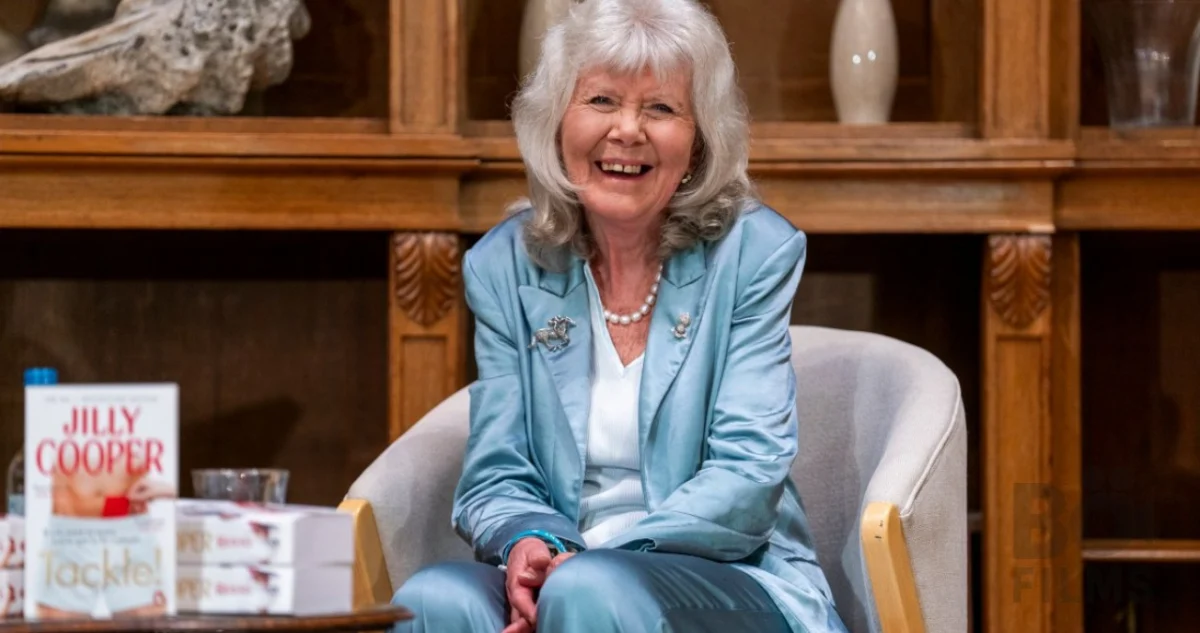
Jilly Cooper, the beloved British novelist behind the Rutshire Chronicles, has died at age 88 after a fall. Her children described her death as a complete shock, calling her “the shining light” of their lives. Her passing marks the end of an era in British popular fiction, filled with wit, sensual energy, and fierce social insight.
A singular voice in British fiction
Jilly Cooper had a style like few others. She wrote bold, funny, romantic stories filled with dysfunctional aristocrats, horse shows, and thunderous affairs. Her most famous creation, Rupert Campbell-Black — a posh, arrogant, flirtatious show-jumper — captured imaginations from the 1980s onward. He wasn’t just a character: he was a symbol of Cooper’s ability to mix sex with satire, charm with chaos.
What made Cooper special wasn’t just the drama in her pages, but the curiosity with which she approached her world. Her long-time agent, Felicity Blunt, highlighted her eye for class conflict, emotional longing, and human weakness, saying Cooper’s stories explored “grief, sex, rivalry, marriage, fertility… with her signature depth and mischief.” You could say she gave chick-lit edge and elegance.
For me, Cooper’s books were like secret gates into a world both absurdly posh and oddly familiar. You laughed without guilt, rooted for her messy characters, and came away seeing a bit of your own flaws projected onto satin-covered sofas in country houses. To read Gwen Stefani headlines magical 2025 Disney Christmas Parade
The Rutshire Chronicles: a genre of their own
The Rutshire books, beginning with Riders in 1985 and followed by Rivals, Polo, and several others, became instant classics of British popular literature. Written in prose that combined romantic flair with biting social commentary, these novels weren’t afraid of melodrama, and that’s what made them addictive.
There’s something deeply English about these stories, set in towns full of people with double-barreled names and very little inner peace. Cooper’s ability to conjure up horse-studded landscapes, high-society power struggles, and steamy romances gave her books a unique place on bookshelves—next to the likes of Jane Austen, but updated for the ‘80s and ‘90s.
It’s no surprise her agent compared her social observation to Austen. While Austen dissected polite society with quiet irony, Cooper wielded her pen like a fencing foil: fast, playful, and just sharp enough to draw a little blood under the surface.
Her impact didn’t stop on the page
In recent years, Cooper’s world started making its way to screens. A television adaptation of Rivals, her 1988 novel, is set to premiere on Disney+. Cooper wasn’t just credited—she got involved, serving as executive producer and helping the creative team shape the series. According to Felicity Blunt, her ideas added spark to the scripts, and her joyful presence on set made her part of the team.
The cast alone suggests just how seriously the adaptation is being taken: To read Toho expands into Europe with bold anime distribution moves
- David Tennant
- Alex Hassell
- Bella Maclean
- Emily Atack
- Danny Dyer
- Katherine Parkinson
- Nafessa Williams
Set in 1980s Rutshire, the series centers on politics and rivalry, as Rupert Campbell-Black faces off against the ambitious MP Tony Baddingham. Whether this adaptation will capture the full madness and magic of Cooper’s voice remains to be seen—but knowing she was behind the scenes gives me hope.
The woman behind the books
Cooper wasn’t just sharp with a pen—she was known in real life for her generosity, warmth, and huge emotional intelligence. Friends and collaborators describe someone who was just as observant and curious in person as she was on the page. She didn’t write from a high tower—she listened, absorbed, and laughed alongside the rest of us.
A thanksgiving service will be held in her honor at Southwark Cathedral in London in the coming months. It’s a fitting tribute to someone whose stories were obsessed with life in all its beauty and messiness, someone who made us laugh and feel and turn the page long after midnight.
