
See Unsee summary
Adapted from Colleen Hoover’s bestselling novel, “Regretting You” hits theaters on October 24, 2025, promising emotional intensity but delivering a mixed experience. Directed by Josh Boone with a script from Susan McMartin, the Paramount release runs 1 hour and 56 minutes and stars Allison Williams, Mckenna Grace, Dave Franco, and Scott Eastwood.
A family broken by grief and betrayal
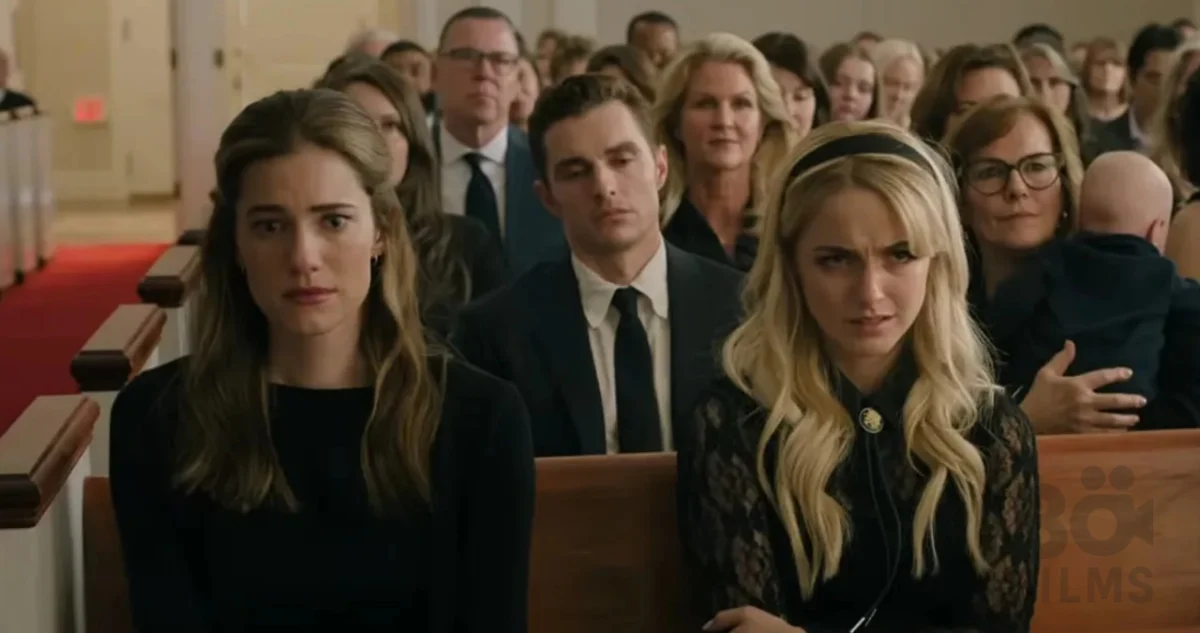
The heart of the story lies in Morgan (Allison Williams), once a pregnant teenager, now a mother trying to keep a fragile connection with her daughter Clara (Mckenna Grace). Married to her first love Chris (Scott Eastwood), Morgan has spent years trying to keep the family afloat. Clara, however, leans more on her aunt Jenny (Willa Fitzgerald) and beloved father, leaving her relationship with Morgan tense and distant.
When tragedy strikes this tightly wound family, everything unravels. Morgan uncovers a truth that not only alters her marriage but shatters her entire emotional compass. At the same time, Clara falls into her first love with Miller (Mason Thames), a kind, low-key classmate who offers her a semblance of escape.
The film attempts to run on twin rails: one built from grief, betrayal, and pain; the other from the blush of teenage romance. Honestly, I found this dual-structure ambitious but unbalanced. The emotional gravity on Morgan’s side feels diluted by Clara’s more surface-level storyline. To read Charlize Theron and Taron Egerton face off in 2026’s Apex trailer
Missed opportunities and shallow waters
Where the novel dug deep into emotions, the film hesitates. Josh Boone directs with a soft touch, but too often the scenes meant to pack emotional weight come across as flat. There’s a noticeable lack of tension, especially compared to the stronger adaptation of Hoover’s It Ends With Us, which at least delivered its dramatic beats.
Allison Williams portrays Morgan with quiet strength, but there are times where the emotional beats feel rushed or underwritten. Dave Franco as Jonah brings some warmth, though his character never really gets space to grow. The de-aging effects used during flashbacks are distracting and frankly unnecessary; watching adult actors pretend to be students always pulled me out of scenes emotionally.
Mckenna Grace, usually brilliant, seems restrained here. Her scenes with Mason Thames don’t spark expected chemistry. Their story feels stuck in a YA template: sweet but forgettable. As a viewer, I kept waiting for riskier, bolder choices—the kind that make stories feel alive.
An ambitious structure but too many compromises
Trying to bridge adult heartbreak with teenage hope is a valid creative choice, but the film doesn’t commit enough to either. Plot threads feel rushed or underdeveloped, as if the script struggled to fit everything into one film rather than focusing on fewer, deeper arcs.
A few things that stood out—unfortunately, for the wrong reasons: To read Ranking Shyamalan’s Hits: Which Film Defines His Legacy?
- Flashback scenes undermined by awkward visual effects
- Noticeable product placement, especially for AMC Theatres and other Paramount-owned properties
- An inconsistent tone that shifts from soap opera to coming-of-age drama without warning
- Two leads with talent underserved by a script lacking in nuance
From a storytelling perspective, what stood out most to me was the emotional timidity. Regretting You hesitates where it should lean in. The betrayal at the story’s core is treated with politeness. The pain is filmed at a distance. There’s so much going on—and yet, not enough is felt.
Behind the scenes, everything is in place to make a powerful adaptation. Tim Orr’s cinematography is competent but rarely creative. Brittany Hites’ production design keeps things grounded in suburban familiarity, while Nate Walcott’s score gently nudges big emotions without offering much invention. The cast is stacked and clearly dedicated—they’re not phoning it in—but they’re working against the material.
Paramount clearly hoped to capture lightning from previous adaptations, but the film plays it so safe that nothing really lingers once the credits roll. There’s drama, sure, but not much resonance.
As a longtime fan of family-centered dramas, I wanted to feel gutted by this story. But its restraint is precisely what stops it from being great. The book left a deeper bruise.
