
See Unsee summary
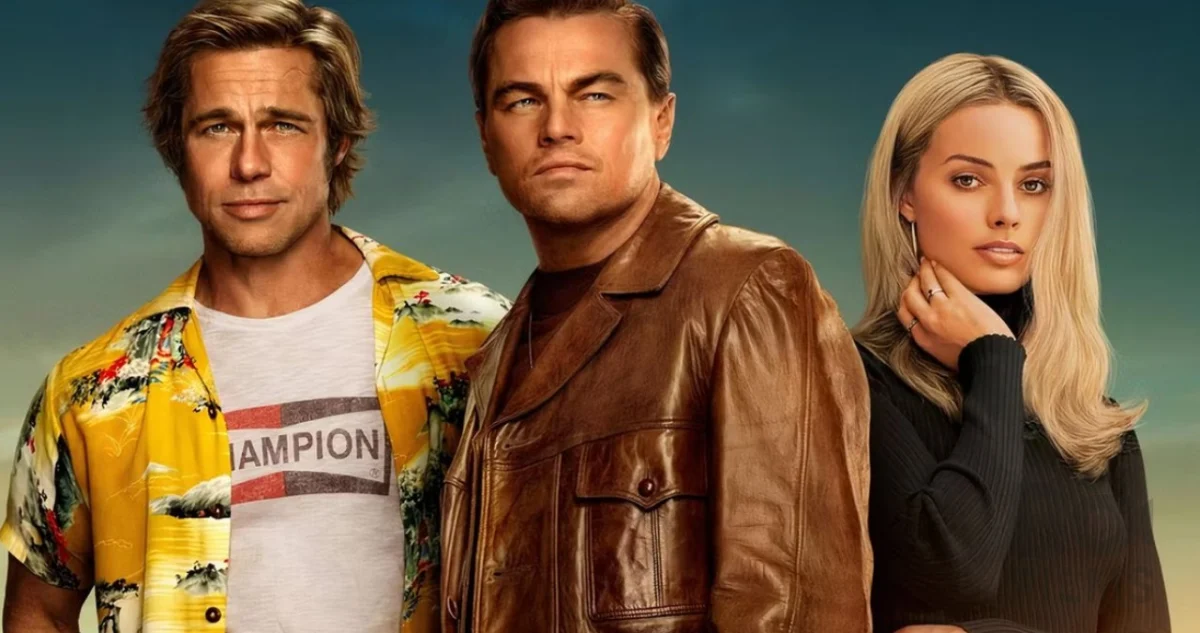
In 2019, Quentin Tarantino gave us Once Upon a Time in Hollywood, a vibrant ode to a lost Los Angeles, and perhaps to his own memories of growing up near the silver screen. A new behind-the-scenes book dives deep into the film’s production, revealing a director determined to resurrect an era, not simulate it.
A Hollywood That Feels Alive Again
To recreate 1969 Hollywood, Tarantino didn’t just sprinkle a few old cars on the street and call it done. He envisioned something far more immersive: a city block-by-block transformation of Los Angeles back to its golden age. The Making of Quentin Tarantino’s Once Upon a Time in Hollywood by Jay Glennie reveals how this vision turned into a feat of cinematic archaeology.
Hollywood Boulevard was shut down, up to eight blocks at a time, with every storefront, sign, and lamppost redesigned to match the late ’60s. It wasn’t easy — production had to secure permission from the city council and work closely with local businesses. Tarantino himself stepped in, delivering an impassioned plea to officials about preserving cultural memory, and his words convinced a skeptical city council to grant him the impossible.
I remember watching those scenes in the theater, not with nostalgia — I wasn’t alive in the ’60s — but with awe. You don’t just see the period, you feel embedded in it. It’s as if the movie doesn’t recreate 1969, it time-travels into it. To read Charlize Theron and Taron Egerton face off in 2026’s Apex trailer
Craft Over Code: A Director’s Refusal of CGI
Tarantino’s insistence on practicality over digital effects is legendary, and here, it became almost a principle. He directed his production designer, Barbara Ling, to imagine every scene from the perspective of a child lying in the backseat of a car — a memory, not a montage.
Ling, a Los Angeles native herself, leaned into textures, colors, and details. Every billboard, every gas station, even loose flyers had to belong to the time. No digital sweeps of green screens. Everything was built, painted, and installed for real. This grounding gives the film a strange electric beauty — even in moments where not much is happening, you’re pulled into the fabric of a world that could’ve been filmed 50 years ago.
Actors Who Were More Than Just Performers
Leonardo DiCaprio, who plays fictional TV actor Rick Dalton, was visibly moved when he saw Sunset Boulevard restored. He brought his father and stepmother to the set — not just out of pride, but because as former hippies, they were stepping back into a world they had actually lived through. It’s that blending of memory and fiction that gives the film its hidden melancholy.
Brad Pitt, as Cliff Booth, got to live out his boyhood dream: roaring through downtown LA in a vintage car, without traffic or limits. You can feel it in his performance — that ease, that looseness. He’s not acting the era, he’s living it in the frame.
Then there’s Margot Robbie. Her portrayal of Sharon Tate never felt like imitation. She found subtle ways to evoke something more innocent and untouched in New Hollywood. One story from the shoot stood out to me: Tarantino had Robbie buy a book in the re-created Larry Edmunds Bookshop, just like Tate once did. She chose Tess of the d’Urbervilles, a book the real Tate bought as a gift for Roman Polanski. That kind of attention to private truth amid public legend is something the film — and Robbie’s performance — constantly plays with. To read Ranking Shyamalan’s Hits: Which Film Defines His Legacy?
A City Collaborates with a Film
Building this illusion required massive coordination with Los Angeles institutions. The Musso & Frank Grill, a restaurant unchanged in decades, needed barely any set dressing. Other spots weren’t so easy. Prop teams retrofitted old cash registers, swapped menus, replaced signage… all with one goal: make the viewer forget they’re watching a 2019 film.
There’s something poetic about seeing Al Pacino, as Rick Dalton’s agent, walking into Musso’s. A real place in a fictional world, woven together in a way that preserves both.
Filming in actual LA streets wasn’t just an aesthetic choice, it was a production challenge of epic scale. A driving scene with Brad Pitt required shutdowns on the 101 freeway, something productions rarely attempt. But every traffic jam, every old sedan you see on screen — it was real. Not rendered.
Locations Built from Memory
Tarantino, cinematographer Bob Richardson, and first assistant director Bill Clark searched endlessly for two adjacent houses that would let them pull off the film’s final, haunting sequence. It sounds simple but finding homes close enough together, in the right light and right neighborhood, felt like chasing ghosts.
Eventually, they found them in the Hollywood Hills, quietly waiting, with just enough age and shadow to let a final shot whisper instead of shout. It’s a payoff that only works because everything until then has been tactile, grounded, undeniable.
- Shot entirely on real Los Angeles locations
- Zero CGI used for buildings, streets, or crowds
- Film sets restored instead of digitally altered
- Recreated cultural landmarks with historic accuracy
Behind the Book: A Tribute to Craftsmanship
Jay Glennie’s upcoming book, set to release on October 28, 2025, digs deep into this cinematic resurrection. At over 500 pages, it compiles interviews, personal stories, and production anecdotes from Leonardo DiCaprio, Brad Pitt, Margot Robbie, Austin Butler, and others from the cast. This is the first of ten planned volumes on Tarantino’s full body of work — from Pulp Fiction to Django Unchained.
There’s a real intimacy in this project, probably because it started with trust. Tarantino admired Glennie’s earlier work on The Deer Hunter, and offered him something few filmmakers would: full access. Not to gossip, not to inflate the legend, but to document a shared love of cinema’s power to resurrect time.
It’s rare these days to see a director, a studio, and a city align this perfectly. Once Upon a Time in Hollywood was finished on time and on budget, despite all the chaos it could’ve triggered. Producer David Heyman describes Tarantino during that shoot as “dreamy.” What a word for someone often seen as intense or controlling.
But it somehow makes perfect sense. Because when you watch this film — really watch it — you realize it’s less a story about a fading actor and more a story about a filmmaker dreaming frame by frame, and making that dream real for a few glorious miles of LA pavement.
