
See Unsee summary
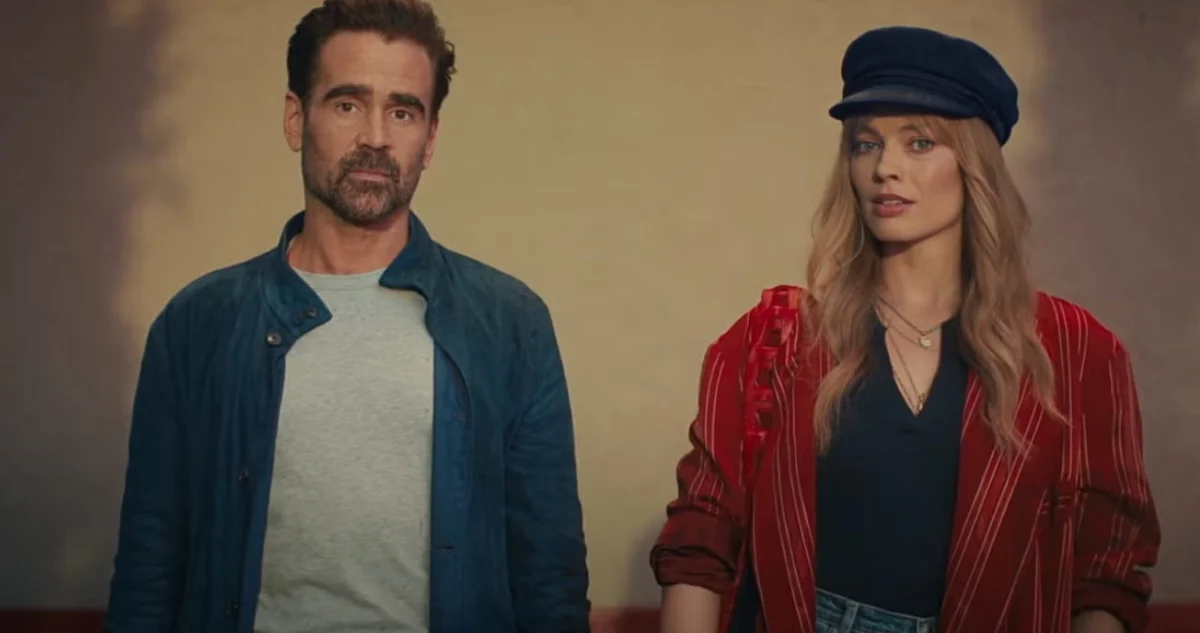
Two strangers. One wedding. And a GPS that leads them not to a destination, but to memories, regrets, and old wounds. That’s the premise of A Big Bold Beautiful Journey, a romantic fantasy anchored by Margot Robbie and Colin Farrell. More than just a love story, it’s an ode to emotional travel and the power of revisiting the past.
The spark of an idea on a lonely road
It all began with heartbreak. After a tough breakup, screenwriter Seth Reiss found himself on the highway, following a GPS suggestion for a long, seemingly aimless drive. The phrase “a big, bold beautiful journey” popped into his head—more poetic than practical. But it stuck. From that unexpected spark came the seed for a film about going off course not geographically, but emotionally.
Instead of giving its characters directions, Reiss’s imagined GPS offers psychological detours. In the film, Sarah (Robbie) and David (Farrell) are strangers who cross paths at a wedding. They’ve each rented a car with a GPS system that mysteriously leads them through magical doors and into vivid memories. They’re not just revisiting places—they’re stepping into moments they left unresolved.
Scenes shift between free-flowing fantasy and grounded emotion, thanks to director Kogonada’s precise eye. It’s no surprise. His previous work, like After Yang, already showed he had a deep sensitivity for visual poetry and human introspection. To read Charlize Theron and Taron Egerton face off in 2026’s Apex trailer
Intimate performances in a surreal frame
The film walks a delicate line: part romantic comedy, part metaphysical drama. That works, in large part, because of Margot Robbie and Colin Farrell. Their chemistry is warm, natural, and never forced. While the premise leans into fantasy, their connection reminds us that genuine emotion doesn’t need special effects.
One particularly poignant moment sees Sarah reconnect with the memory of her late mother, played beautifully by Lily Rabe. The scene is deeply intimate, even surreal, and yet it never loses its emotional truth. Robbie, reflecting on the experience, called it a surreal moment that still felt “grounded and real.” Watching it, I felt the same. It’s one of those scenes that sneaks up on you—unfolding quietly, but hitting hard.
Something that’s easy to miss but crucial: Lily Rabe, nearly the same age as Robbie, plays her mother—not in a literal biological sense, but as an emotional presence. That’s part of the film’s dreamy language. Memory doesn’t care about realism. It works in symbols, in emotional logic. And that’s what makes this pairing feel right.
A love letter to original storytelling
What also makes this project special is that it arrives in a cinematic landscape overrun by sequels, spin-offs, and franchises. A Big Bold Beautiful Journey is original. A story not lifted from a comic, rebooted from the 80s, or designed to launch three sequels. It’s self-contained, personal, and above all, new.
Margot Robbie commented, “Right now, in particular, is a really good time for film.” I get what she means. There’s a quiet resurgence of original voices, and this film is part of that wave. Colin Farrell also weighed in, saying that while franchises have their place, there’s a genuine appetite for new kinds of stories. He listed recent films like Bring Her Back, Sinners, and Weapons—original works that gained traction in 2025—for showing what’s possible. To read Ranking Shyamalan’s Hits: Which Film Defines His Legacy?
It’s worth noting:
- The film is directed by Kogonada, known for his subtle, atmospheric style.
- Seth Reiss’s script pulls from very personal experiences, adding authenticity even to the film’s most whimsical moments.
- The cast is small but striking, with Robbie and Farrell at the core, supported by Lily Rabe in a key emotional role.
- Its theatrical release is set for 2025, building anticipation among fans of emotionally driven, adult storytelling.
- It joins other standout original titles of the year, like Anora, the Oscar-winning drama that proved audiences are still hungry for fresh cinema.
Julien’s take
Honestly, this is the kind of film I watch for. It’s not trying to change the industry with spectacle, but it does something rarer: it touches emotional nerves we’ve all kept buried. Its quiet originality says just as much as its moments of visual whimsy. We need more films like this—not louder, just truer.
Seth Reiss summed it up best: “There’s nothing more fun than seeing something we haven’t seen before. It reminds us why we went to the movies.” When I left the theater, I couldn’t agree more. Not every journey has to be logical. Sometimes, the most important ones are the emotional detours.
