
See Unsee summary
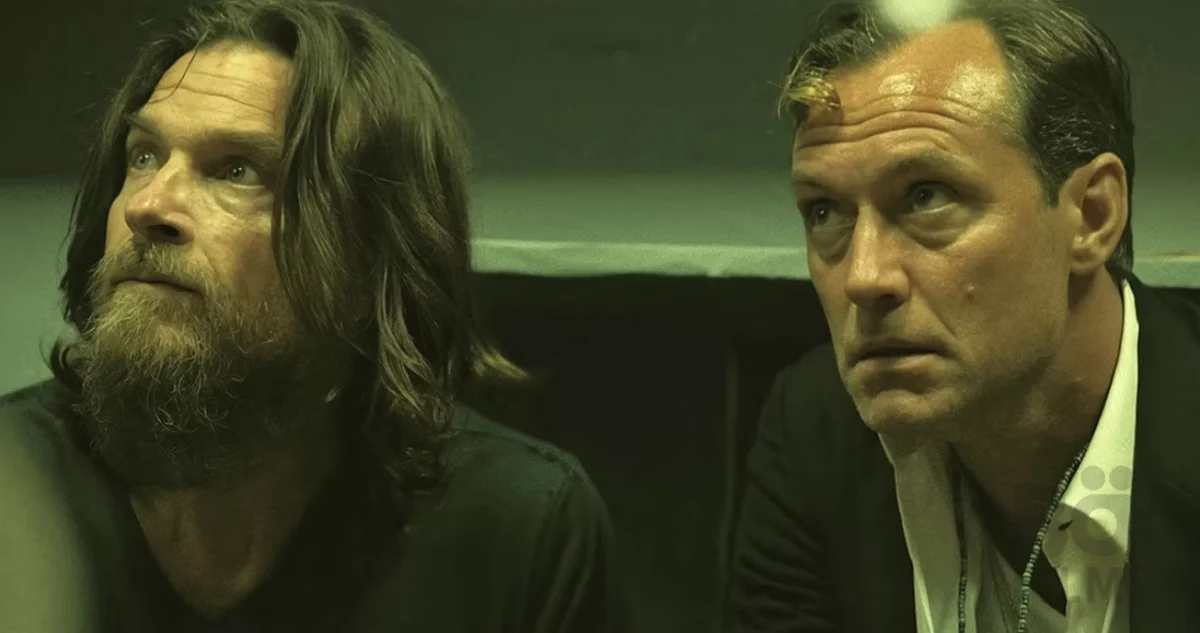
Jude Law and Jason Bateman deliver raw, affecting performances in Black Rabbit, a tense Netflix limited series set in Brooklyn’s underbelly. As estranged brothers bound by trauma and fate, their on-screen connection feels lived-in and authentic, driving a dark story of redemption, guilt, and family ties stretched to the limit.
A broken bond at the heart of the series
Jake Friedkin, played by Jude Law, has built what looks like a new life. A sleek restaurant owner in a gentrified Brooklyn neighborhood, Jake’s place—also called Black Rabbit—is more than a trendy food spot. It has a hidden VIP room, whispers of exclusivity, and, beneath the surface, a man trying to outrun his past.
This fragile routine gets shattered when Vince (Jason Bateman), Jake’s older brother, returns after years on the run. Vince had vanished, leaving behind chaos and debt to a local mobster, Joe Mancuso (performed with cold gravity by Troy Kotsur). His sudden reappearance doesn’t just threaten Jake’s business—it reopens unresolved wounds, ones rooted in a violent, alcoholic childhood.
The series digs deep into that fraternal history, showing how shared trauma doesn’t heal with time or distance. Law shows us a man holding himself together through control, while Bateman plays Vince as a raw nerve, desperate for connection but tethered to bad decisions. When they face each other, it’s often silent seething—two people who know everything about each other, and have no idea who the other has become. To read Pluribus finale shocks fans as season 2 faces long wait
Violence at the center of redemption
It’s in episode six that everything unravels. Forced into a corner by the mobster’s son, Junior (Forrest Weber), Vince takes part in a botched robbery at Jake’s restaurant. The tension is unbearable: Vince, masked, points a gun at his own brother during a flashy party. Jake sees right through the disguise, and in that single look, you feel years of love, disappointment, and fear colliding.
The heist ends in tragedy. Wes (Ṣọpẹ́ Dìrísù), Jake’s friend and investor, is shot and later dies—casualty of a brother’s return that was never meant to go right. Vince kills Junior in a desperate move to protect Jake, but the damage is beyond repair. The next scene, with Vince confessing by phone before jumping to his death from the rooftop, hits hard. There’s no dramatic music, no grand monologue. Just a man who lost his fight with himself.
That moment left me with a tight chest. Not because it was unexpected—I had a feeling Vince wouldn’t make it—but because of how quiet and final it felt. There’s nothing flashy about a man giving up. It’s just heartbreaking.
Where grief meets grace
In the final episode, Black Rabbit shifts tone. The violence recedes, and we’re left with its aftermath. Jake loses more than a brother—he loses the illusion that life can be cleanly curated. In a dreamlike sequence underscored by Ella Fitzgerald’s “Manhattan,” we find him tending bar, no longer in charge, no longer running. There’s something pure about it—not quite hopeful, but grounded.
There’s a beautiful subtlety in this shift. Rather than tie up the story with resolutions, it leaves Jake in a place of emotional rebuilding. His grief hasn’t made him better, but it’s made him honest. To read Taylor Swift opens up in final Eras Tour docuseries episode
Production behind the intensity
The authenticity of the Friedkin brothers’ relationship is no accident. Jude Law came aboard early, having previously worked with co-creator Zach Baylin on the film The Order. Bateman joined later, not just to co-star but to direct the first two episodes, shaping the series’ visual identity. They hadn’t met before this project, but their chemistry feels like decades of baggage compressed into each scene.
What impressed me most wasn’t just their performances—it was the restraint. Both actors are known for intensity, but here, they leave space for silence and stillness. It’s the kind of acting that lets you feel the years between words.
What makes Black Rabbit worth watching
- A grounded, emotionally raw performance from Jude Law
- Jason Bateman like you’ve never quite seen him: wounded, unpredictable, human
- Sharp, moody direction that mirrors the characters’ unraveling
- A story that explores guilt and loyalty without false drama
- An ending that doesn’t try to heal everything, but won’t let you forget
The show premiered at the Toronto International Film Festival before dropping in full on Netflix—a strong statement of confidence from the platform. It’s not a crowd-pleaser in the usual sense. There’s no twisty noir, no sensational violence. What it offers is deeper: a look at what it means to forgive someone you love, even when it ruins you.
As Bateman put it in interviews, Black Rabbit is about what we tolerate from the people we’re bound to. That idea stuck with me long after the series ended. Because sometimes, family isn’t about second chances—it’s about understanding why we keep giving them.
