
See Unsee summary
With over 175,000 attendees, major premieres, and a new official competition, the 30th Busan International Film Festival (BIFF) signaled a turning point in the landscape of Asian cinema. The 2025 edition not only broadened its scope but also deepened its commitment to bold regional voices and global cinematic dialogues.
A new era begins with competition
For the first time in its history, BIFF introduced an official competition section—a bold move for a festival that, for decades, focused on discovery and diversity rather than head-to-head competition. The big winner was veteran Chinese-Korean filmmaker Zhang Lu, who took home the Best Film award for Gloaming in Luomu. The film, atmospheric and introspective, draws on Zhang’s dual heritage to deliver a deeply personal yet universally resonant story.
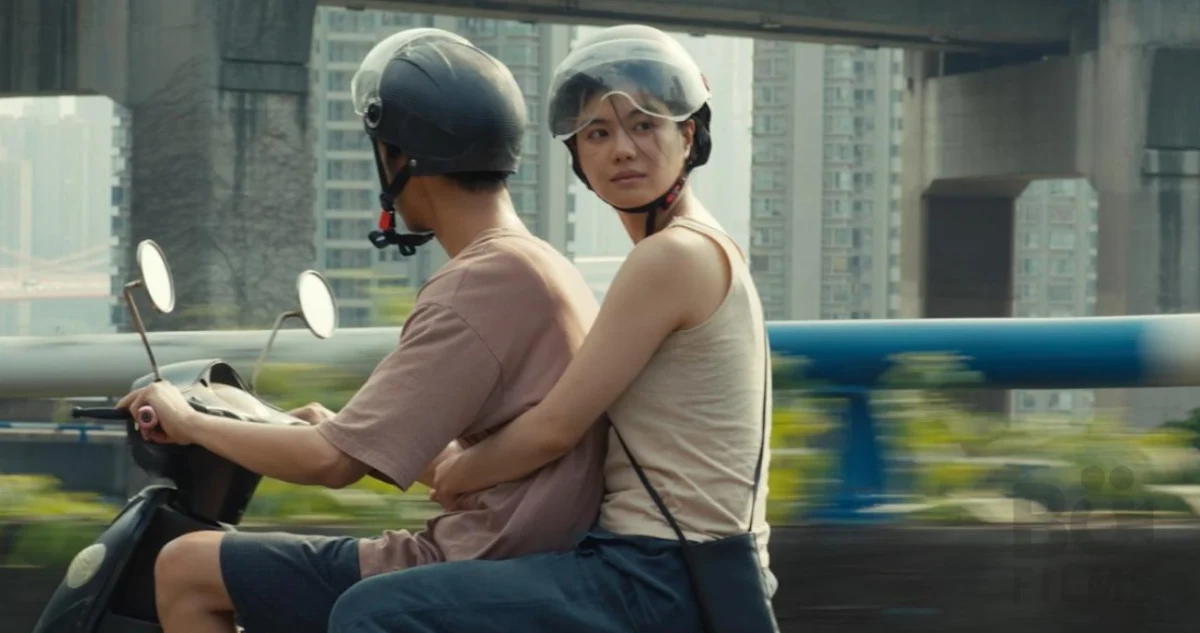
Another standout moment came when Taiwanese actress Shu Qi, known for her magnetic screen presence, was awarded Best Director for Girl, a coming-of-age tale inspired by her own childhood. Girl struck a delicate balance between nostalgia and identity exploration. Seeing Shu Qi make such a strong debut behind the camera was a beautiful surprise—proof that personal narratives still have the power to disarm us when handled with honesty.
A global reach, with hometown roots
This year, BIFF screened 329 films, including 90 premieres, across 31 screens in seven theaters throughout Busan. The star wattage was undeniable. From Korean A-listers like Lee Byung-hun and Han Hyo-joo to international heavyweights like Guillermo del Toro, Michael Mann, Juliette Binoche, and Milla Jovovich, the festival radiated ambition. To read Charlize Theron and Taron Egerton face off in 2026’s Apex trailer
One of the biggest events was the Imax premiere of Guillermo del Toro’s Frankenstein. Though not in competition, the film drew huge crowds and reinforced BIFF’s intention to be more than a regional gathering—it wants its spot among the great global stages.
What I loved this year was the feeling that BIFF wasn’t just hosting films; it was curating conversations. The Carte Blanche program was an example: creatives selecting films to screen and presenting their choices. I was especially touched by the exchange between Maggie Kang, who picked Bong Joon Ho’s The Host, and Bong himself, who in return selected Aoyama Shinji’s Eureka. That gesture said everything about what it means to admire the work of others. It reminded us how film can be both deeply personal and generously shared.
Showcasing Korean storytelling
As expected, Korean filmmakers brought strong, nuanced perspectives.
A few that stood out:
- Yoo Jaein’s En Route To, which talked about teen pregnancy without moralizing. Produced by Hive Filmworks, the film was sharp, funny, and full of heart. And Lee Ji-won, in a breakout role, gave a performance that felt lived-in rather than performed.
- Lee Kwang-kuk’s Beautiful Dreamer explored grief with restraint and a poetic touch.
- Genre cinema had its moment too. Stylish thrillers like Ra Hee-chan’s Boss and Lee Kwan’s Project Y (starring rising stars Han So-hee and Jun Jongseo) proved that Korea still knows how to fuse commercial appeal with smart storytelling.
It’s films like these—deep yet accessible—that make me hopeful for the future of Korean cinema, even when its domestic box office is going through a rough patch. To read Ranking Shyamalan’s Hits: Which Film Defines His Legacy?
Faces to watch: rising voices from Asia
Beyond Korea’s strong showing, the rest of Asia brought powerful debuts as well. Indonesian actor Reza Rahadian made a big impression with On Your Lap, his directorial debut. The intimate drama swept up four awards, including the Rising Star nod for Claresta Taufan, whose performance left me genuinely moved. There’s a quiet strength to stories like these—told with tenderness, without overplaying the emotion—that remind you why we go to festivals in the first place.
Chinese director Bi Gan also returned in style, presenting Resurrection, which had already received the Prix Spécial at Cannes. What stayed with me most was not just the film’s visuals, but his words: “Movies are a feeling of many people dreaming together.” That sums up not just his work, but the spirit of BIFF this year. Watching that film with a packed audience, I felt exactly what he meant.
A growing audience despite financial uncertainty
The numbers speak volumes: 175,889 audience members passed through the festival—around 20,000 more than last year. The Asian Contents & Film Market (ACFM) also saw a bump, reaching over 30,000 attendees, a 13.5% increase.
While government backing dropped slightly—about 4% less than the previous year—the energy on the ground told a different story. The passion hasn’t gone anywhere. If anything, this edition felt more alive because it didn’t rely solely on grand budgets or buzzwords. It leaned into sincerity. Films rooted in culture, voice, and human experience took center stage.
And really, that’s what BIFF has always done best: made space for stories that need to be told, in ways that feel both intimate and part of something much larger.
