
See Unsee summary
Godzilla will roar again with Godzilla Minus Zero, the next Japanese film in the legendary franchise. Directed by Takashi Yamazaki, who made a powerful impression with Godzilla Minus One, this new project was officially unveiled at Tokyo’s Godzilla Day 2025, with a worldwide release eyed for late 2026. Here’s everything we know so far.
A return under high expectations
Following the unprecedented success of Godzilla Minus One, all eyes are on what Toho Studios and director Takashi Yamazaki will do next. Godzilla Minus Zero (stylized as Godzilla -0.0) will mark Yamazaki’s return not only as director but also as visual effects supervisor, continuing the creative approach that earned praise from critics and fans alike.
The teaser logo revealed at the Godzilla Day event strongly echoes the sober, almost severe aesthetic of its predecessor: black, white, stark lines. It’s not just about style — it sets the tone for a film that is likely to explore deeper, perhaps darker ground. Yamazaki himself co-designed the new emblem, reinforcing the sense of personal vision at the heart of the project.
After delivering not just spectacle but emotion with Godzilla Minus One, Yamazaki now carries the hopes of an entire fan community. Me included. I still remember being struck by the raw human emotion in Minus One, especially in the quietest scenes. If the next chapter maintains that balance between destruction and heart, we may be witnessing a new peak in the franchise. To read Charlize Theron and Taron Egerton face off in 2026’s Apex trailer
The legacy of Godzilla Minus One
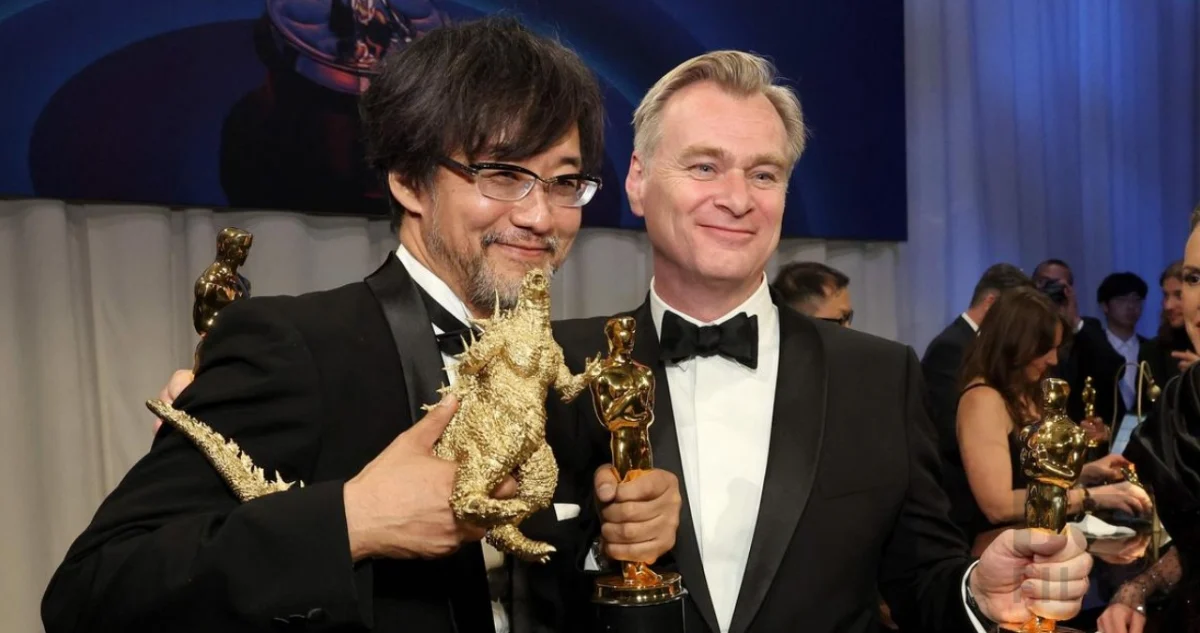
Godzilla Minus One made history in 2023, becoming the first-ever Godzilla film to win an Academy Award — and not just any Oscar, but Best Visual Effects. With a relatively modest $15 million budget, the film managed to gross over $113 million worldwide. More impressively, it took the crown as the highest-grossing live-action Japanese film at the North American box office.
That kind of success doesn’t just open doors, it builds highways. The impact of Godzilla Minus One showed studios that big emotions and strong storytelling could shine even under a massive monster’s shadow. Not to mention technical excellence.
As a viewer, I found so much more than a kaiju spectacle. There was dread, resilience, the weight of survival. For a franchise that has long danced between camp and catastrophe, Yamazaki brought a necessary human core. It changed the way I see the character of Godzilla — not just a monster, but a metaphor with weight again.
What we know — and what’s still under wraps
Here’s what’s confirmed so far for Godzilla Minus Zero:
- Directed by Takashi Yamazaki
- Global release planned for late 2026
- Filming expected to begin later in 2024
- Locations will include international settings: New Zealand and Norway
- Still no confirmed cast or plot details
- Emblem and aesthetic will continue in the style of Minus One
It’s worth pointing out that while this may appear to be a direct sequel, the franchise seems to be positioning it differently. Its title and fresh number point toward a broader storytelling ambition — less a follow-up, more a conceptual continuation. A new chapter, but in the same language. To read Ranking Shyamalan’s Hits: Which Film Defines His Legacy?
A new age for Japanese Godzilla
Godzilla Minus Zero will mark the 31st Japanese feature-length entry in the franchise (not counting U.S. co-productions like Legendary’s MonsterVerse). But it may also represent something more: a turning point. Toho appears committed to elevating Godzilla as serious cinema, with international scope and emotional resonance.
Filming on multiple continents, bringing back Yamazaki, giving themselves time until 2026 — none of this points to a rushed project. And that’s reassuring. After the triumph of Minus One, the temptation would be to strike quickly. Instead, Toho seems to want to strike right.
For those of us who grew up with Godzilla in various forms — terrifying, silly, political, mythic — this renewed vision is a breath of fresh nuclear fire. There’s respect now, not just for iconography, but for storytelling. I’m ready for another reminder of why the King of Monsters still matters.
