
See Unsee summary
Italy has officially chosen Familia as its contender for the Best International Feature Film at the 2026 Oscars. Directed by Francesco Costabile, the film stands out for its powerful narrative drawn from real events, and its impactful presence at the Venice Film Festival already hints at its potential for international recognition.
A dark melodrama rooted in violence and memory
Familia is adapted from the autobiographical story of Luigi Celeste, a former far-right militant who reflects on his youth shaped by an abusive, criminal father. This backdrop gives the film an emotional weight that’s hard to shake. It doesn’t moralize, but rather explores with raw sincerity how an environment shaped by hatred and brutality leaves marks that time alone can’t erase.
Francesco Costabile doesn’t shy away from the darkness. His direction shapes a dense, oppressive atmosphere where tenderness is rare but deeply felt when it appears. It’s not the kind of film you watch lightly — it sits with you afterwards, forcing reflection.
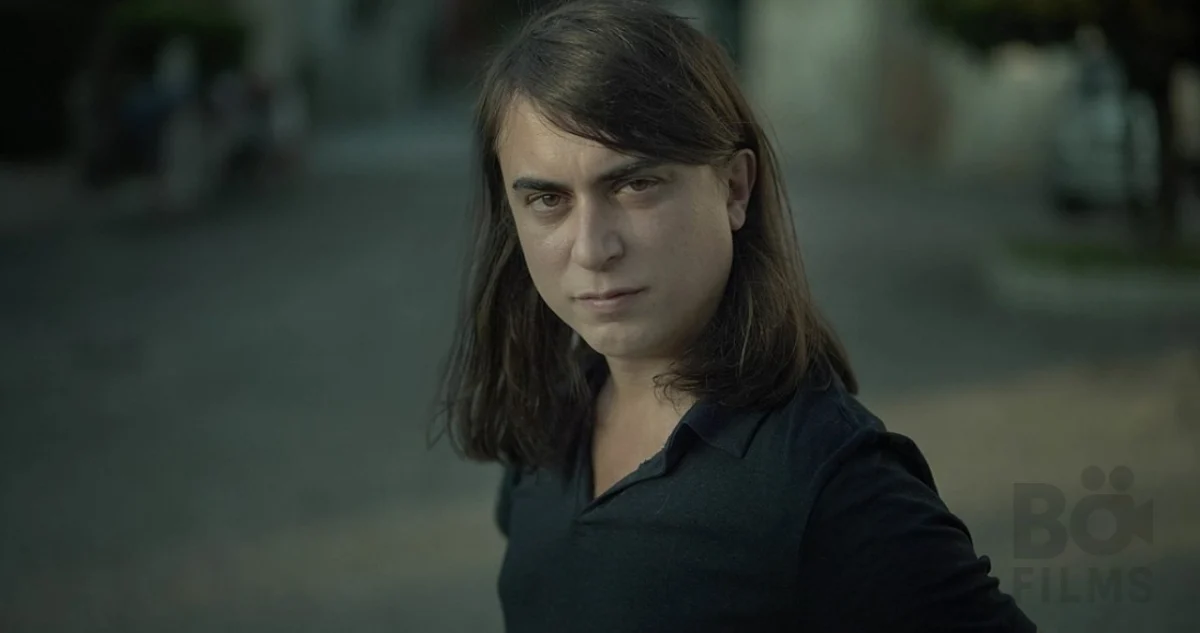
Francesco Gheghi’s performance is central. He brings a quiet, grounded intensity to the character of Luigi, avoiding caricature. His win for Best Actor in the Horizons section at the Venice Film Festival is more than deserved. I was struck by his ability to carry pain without ever overplaying it. As a viewer, you feel every inner fracture. To read Charlize Theron and Taron Egerton face off in 2026’s Apex trailer
A strong ensemble and top-tier Italian production
Gheghi is not alone. Barbara Ronchi brings nuance and fragility to her role, while Francesco Di Leva delivers one of his most unsettling performances. His role as a corrupted, violent father earned him the David di Donatello for Best Supporting Actor. It hits hard. Di Leva manages to be both repellent and tragically human. In a lesser actor’s hands, the character could have become a simple monster. Here, he’s more complex, and all the more terrifying for it.
Behind the camera, the production is just as solid. Producers Attilio De Razza and Nicola Picone (Tramp Limited), along with Nicola Giuliano (Indigo Film) and Pierpaolo Verga (O’Groove), form a seasoned team supported by Medusa Film. International sales are being handled by True Colours, which suggests clear ambitions for distribution beyond Italy.
Navigating a competitive shortlist
Familia was selected from a shortlist of 24 films submitted by Italian producers. Among the strongest contenders were:
- Below the Clouds, a documentary by Oscar-nominated Gianfranco Rosi
- Duse, a historical biopic directed by Pietro Marcello
- Elisa, a crime drama from Leonardo Di Costanzo
It’s worth mentioning the absence of Paolo Sorrentino’s latest film, La Grazia. Although it opened the Venice Film Festival with significant buzz, its Italian release is planned for January 2026, missing the Academy’s September 30, 2025 deadline. This regretful timing made it ineligible for this Oscar run. Sorrentino remains a key figure in Italy’s recent Oscar history, having won in 2014 with The Great Beauty.
A decade after that win, Italy continues to push films that challenge and move. In 2024, Matteo Garrone’s Io Capitano received a nomination, and in 2025, Maura Delpero’s Vermiglio made it to the shortlist but didn’t reach the final five. To read Ranking Shyamalan’s Hits: Which Film Defines His Legacy?
A long road ahead until Oscar night
Familia’s journey toward the Oscars is just beginning. The Academy will publish its 15-film shortlist in this category on December 16, 2025. The final nominations will follow on January 22, 2026. The ceremony itself is scheduled for March 15 in Los Angeles.
Plenty can change between now and then. But what strikes me is that, with Francia, Italy isn’t playing it safe. This is a tough, risky, emotionally dense film. Its power lies in its truth — and personally, I hope Academy members will feel that too. Not just for the artistry, but because films like this remind us that the scars of the past are still very much alive.
