
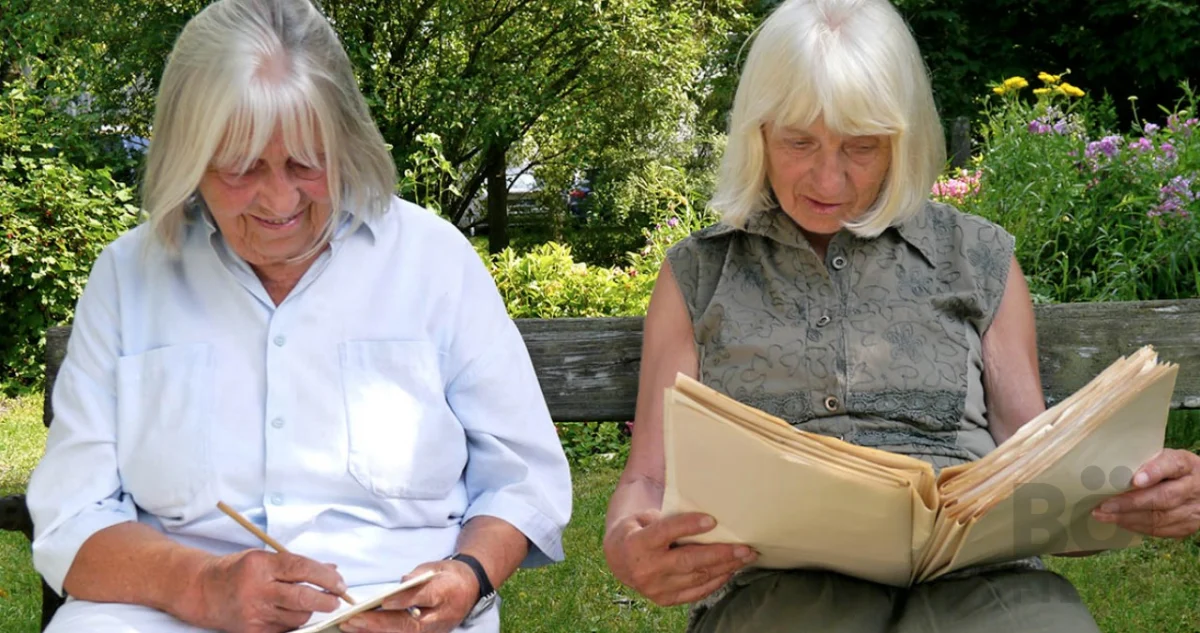
Austrian filmmaker Angela Summereder returns with B for Bartleby, a deeply personal and unconventional adaptation of Herman Melville’s classic short story. Premiering at Doclisboa and now screening at the Viennale, the film blends performance, documentary, and reenactment to reflect on art, memory, and the limits of cinematic language.
Between literature and memory
B for Bartleby isn’t interested in faithfully adapting Melville’s text line by line. What Summereder explores instead is something more fragile, more human: the ways in which literature resists visual translation, yet continues to shape our inner world. At its core lies the voice of her late partner, Benedikt Zulauf, a librarian and actor who once dreamed of directing a Bartleby film himself.
Before his death, Zulauf and Summereder recorded conversations about the story. These tapes, rediscovered years later, form the emotional foundation of the film. Zulauf appears in voice and spirit, haunting the project in the gentlest way. There’s a quiet power in hearing him discuss Bartleby’s strange refusal—“I would prefer not to”—a gesture that echoes across time.
For me, this part of the film moved beyond adaptation and into something more intimate: the unfinished dialogue between two people, carried forward by art. Summereder is not just staging Melville’s tale. She’s mourning, reflecting, continuing. To read Charlize Theron and Taron Egerton face off in 2026’s Apex trailer
A mosaic of forms
Instead of a linear narrative, Summereder weaves together theatrical rehearsals, guided tours about Melville, documentary footage, and moments of pure performance. You sense her trust in the audience: she doesn’t over-explain the transitions or force a single tone. At times, it’s playful. At others, melancholic.
Women take a central role, in contrast to the male-centric world of Melville’s original Wall Street office. Summereder reimagines Bartleby’s universe as inhabited by a collective female presence—performers, readers, participants—mirroring Melville’s real life, where despite his masculine protagonists, he was surrounded by women. Here, the women are emotionally connected and collaborative, while the male characters remain solitary.
Children appear too, proof that even the most abstract literary questions can find a home in young minds. At a youth center, teenagers read Bartleby, discuss its meaning, and even rap about it. This could have felt like a gimmick, but it doesn’t. It’s sincere, and more than that, it’s effective. Their energy pulls Bartleby out of the 19th century and places him in the now.
A few standout sequences:
- A rehearsal scene where actors wrestle with Bartleby’s dialogue, underlining the slipperiness of words when spoken aloud.
- A scene in a rap studio, raw and vibrant, where young artists bring the idea of silent protest into their own language.
- Archival audio of Zulauf, his voice steady and thoughtful, introducing a layer of ghostly tenderness.
The art of failing together
Above all, B for Bartleby is about the impossibility of a perfect adaptation—and how that’s okay. Summereder embraces what she calls “the difficulty of making a film”, and instead of hiding it, she places it front and center. You feel the trial-and-error of creative work. But you also feel the camaraderie, the shared joy in trying. To read Ranking Shyamalan’s Hits: Which Film Defines His Legacy?
There’s no traditional closure, which fits the subject. Bartleby remains elusive, unreadable, and yet so present. The film ends by returning to his refrain—“I would prefer not to”—a line that by now feels like a quiet act of self-definition. Not escape. Not refusal. But introspective resistance.
Summereder’s next project promises another layered blend of myth and modernity, focusing on motherhood and climate change, loosely structured around the medieval Percival epic. If it’s anything like B for Bartleby, it won’t offer simple answers—but it will ask the right questions, in the most unexpected ways.
